 25 Jan 2013
 Posted by mattwright
Learning to surf an SUP race board is an essential skill for every SUP race athlete. Whether you are getting back to shore after a workout or you plan to enter a battle of the paddle style race you need to learn to surf your SUP race board. The problem is that these boards were built to do one thing – go in a straight line fast. Surfing an SUP race board can be difficult.
Here are 6 tips to help you learn to surf your SUP race board.
1. Paddle like you mean it : Given the size of race boards you can get into waves early but to do so you need to get up to speed first.
When you commit to trying for a wave, paddle like a madman (or madwoman) and get on that wave just before it starts to break. That said, don’t paddle like a madman too early or you will be ahead of the wave and the wave will crash on your head or the back of your board causing you to fall of your board.
2. Don’t step back too early : When you are paddling for a wave, your feet should be parallel and in a normal paddling position. Once you catch the wave, step back and get your weight back or you will perl. If, however, you step back too early, you will “put the breaks” on your board and the wave will pass you by. Experience will let you know when to step back.
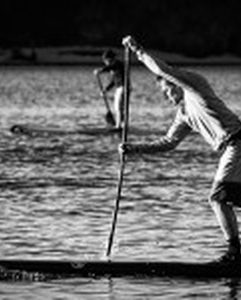
3. If you get on the wave late – get back (farther than you think) and lean back: Given the length of SUP race boards they can be unforgiving if you don’t time your wave entry well. If you are late getting on the wave and the wave is already breaking – get back…way back…then think about going farther back on the board until you can’t go any farther. At a minimum you will need toget your hind food over the rear fin to prevent perling. In many cases your rear foot will need to be behind the rear fin. On many boards this means that you may need to step on the board BEHIND the end of the deck pad. Your deck pad is not a guide to help you learn to surf your SUP race board. Waxing the back of your board behind of the deck pad helps. Finally, stepping back is often not enough to prevent perling. You also need to lean back and get your weight back to get the nose up.
4. Steer with your feet and hips – leaning a little bit won’t cut it: your SUP race board is not a snowboard. Leaning from side to side won’t help you steer your stand up paddle board. Because of the big fat rails on many race boards, you will likely fall over if your only method of steering is leaning from side to side. Once you are in a wave, you will have to use your hips and rear foot to steer the board.
5. Pick your board wisely : Experienced surfers can surf most SUP race boards. Inexperienced surfers – not so much. Chuck Glynn, experienced surfer and Laird race team member, recommends that inexperienced surfers consider SUP race boards with a slight tail rocker as the tail rocker will help control the board and get into waves easier.
6. Don’t trash your SUP race board learning to surf: SUP race boards can be fragile. Learning to surf will require many wipe outs and it is likely that your board will go flying into the rocks, the beach, or your head if you are not careful. Learning to surf and SUP race board is a great way to ruin a big investment. If you are new to surfing consider getting a longboard board and learn how to surf, get a cheap SUP surf board or spare SUP race board on craigslist, or a ding resistant board ( such as a Surftech Tuflite board which can be more resistant to dings than other SUP race boards). In our experience, if you are not worried about ruining you board you will be more likely to take chances learning to surf. The real learning comes when you are taking chances.
Bonus: stay out of the lineup : SUP race boards can be weapons of mass destruction. Remember you have a 20 foot kill zone when you are on an SUP race board with a leash. These beasts do not generally have a place in your local surf lineup. Please be a good ambassador for the sport and learn to surf on the inside or on a surf break where you wont hurt anyone.