
 11 Feb 2014
 Posted by mattwright
I used to paddle every single day, and looking to start racing for the first time, then, 4 months ago playing basketball, I suffered a complete rupture of my achilles tendon. I have only just started walking again, and still have a lot of pain and mobility issues, as well as putting on 10kgs of weight from not being able to move. I have just started to paddle again, but only can manage very short paddles once or twice a week due to pain and fatigue.Question is, I want to get myself into paddling long distance again with the goal of paddling our national competition next jan/feb. So question is, how do you think I can best utilise your training programs with a severe injury and winter knocking on my door. My physio tells me I won’t be fully mobile for another 5 months.Any help and advice to get back on the water for my goal of a long distance race next year would be awesome.Pete, from a land where they call physical therapists physio’s
Pete – I am sorry to hear about your hassles. Before we even get to paddling, your first order of business is to get your head screwed on straight. You are probably going completely nuts right now but things might not be as bad as they seem. Below is a chart to graphically remind you that even though things seem bleak and your head is probably spinning that is 100% normal so hang in there.

As you can see, you are several weeks out from your injury. Like every other athlete in your situation you are going nuts right about now because you cannot do what you want to do. Again, that is normal but all is not lost. Hang in there.
While you are recovering – focus on your upper body fitness. Get in the gym and get fit. If it is OK with your doctor and therapist it seems that there is no reason why you cannot get in the water and swim and do some serious gym work to stay fit. As far as swimming goes, you might need a pull buoy so there is not stress on your injury. Check with your doctor. Normally we shy away from fitness machines but they might be better for you than free weights so you do not have to pick up weights and potentially harm your achilles. Again, check with your doctor and therapist. Finally, if you are able to paddle you are probably also able to get on the rowing machine.
Now for the paddling. Take it slow. Take it really slow. Take it slower than you think you should. Maybe take it even slower than your doctor and therapist tell you to. Seriously, all you need is a single setback to ruin your year next year. We are going to leave your rehab schedule to your doctor and physical therapist as it would be irresponsible of us to do any different. We do not know the extent of your injury. Please follow your doctor’s orders.
When you do get the OK to paddle, however, here are a few tips:
-
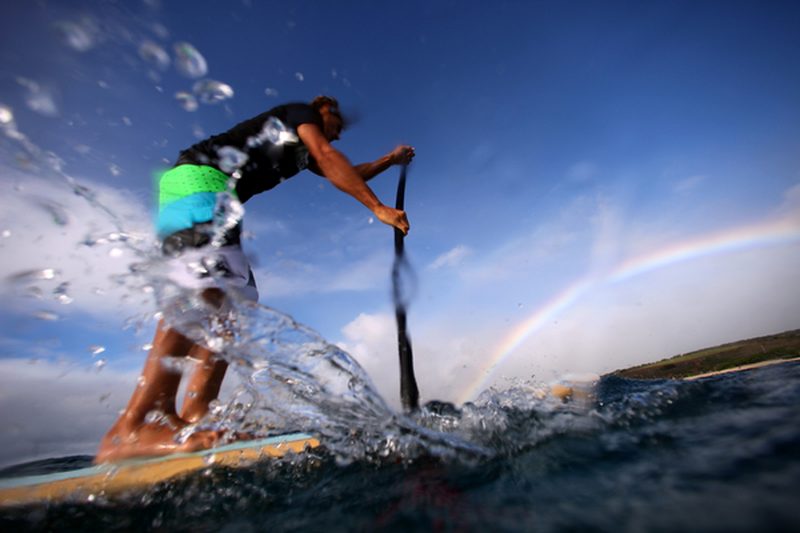
Paddling is tough on your ankles. Paddling on a race board is even tougher. Consider getting a huge, stable, board and paddle that for a few months. It will take some of the pressure off of your ankles and injury but allow you to build paddle fitness.
-
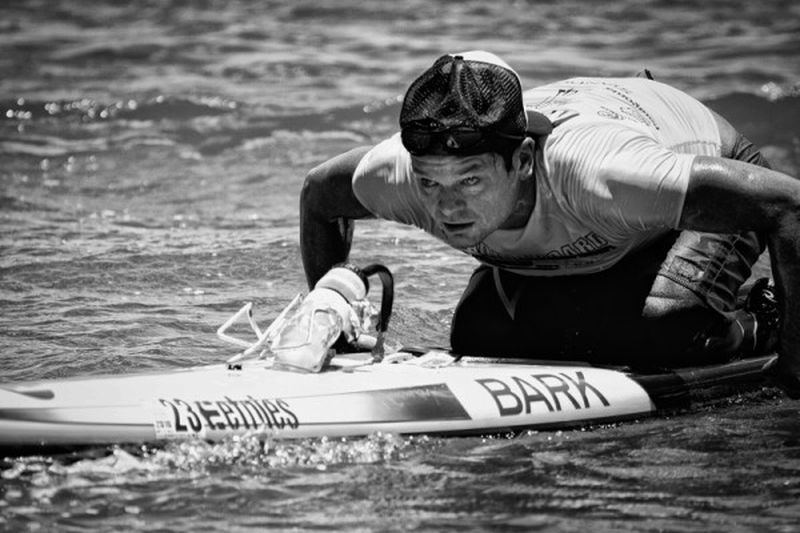
Before you are able to go all out with SUP you might consider prone paddling. It will get you in the water, get you out with your friends, and it will allow you to build your upper body fitness. You probably wont stress your achilles too much as you are paddling on your knees and in a prone position. Check with your doctor.
The bottom line on all of this is that you need to recover before you can even think of paddling seriously again. Follow your doctor and physio’s instructions 100%. While you are recovering consider doing something else like swimming, prone paddling, and gym work to keep fit and get your weight under control so when it comes time to paddle you will be ready.
Roch