 23 Jan 2016
 Posted by mattwright
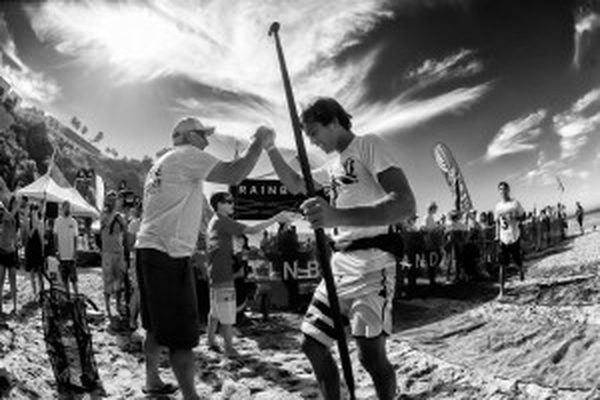
Photo: http://www.fluxphotography.net/
I have your 16 week paddle race training program and your Riding Bumps book. I have to thank you for them because now I know I’ve been training the wrong way for years.Let’s say I set my 16 week training program to finish with the first race of the season so I get there, theoretically, in my best shape. Once the firs race is over what should I do to keep training and don’t loose shape? Maybe is simple but I have no idea on training theory.
What should I do? Keep on 2 weeks of working load and 1 week rest of the competitive phase?
Ahhhh- that is a great question. As you already know, our training programs are 16 week programs. When we were designing our courses we made the decision to stick with 16 week programs because 1) in many parts of the world, winter prevents year round training 2) in our experience that is about as long as many paddlers can stay focused and 3) if you are able to stay focused and train for longer than that it might be time to look into personalized coaching as things change significantly when you try to fit multiple “A” races into a year long training schedule and/or train year round.
All of that said, personalized coaching does not fit into the budget for everyone and there is no reason we cannot talk about how to structure a race season longer than 16 weeks for paddlers who want to extend their season.
As a general rule, if you want to extend our 16 week programs (or design your own) to add in additional races, what you need to do is called a “Mini Periodization” training phase. This combines most of the training phases in the same order but last for a fewer weeks depending on how long you have between races. Here are a few examples:
Example 1: You have a big race 3 weeks after the key race you were training for:
- Take a recover week after your first key race. During this week do easy/short paddle workouts and light cross training. Do not do any strength training.
- 1 week later do a single week designed like the competitive phase in our 16 week programs. These are higher quality sessions (e.g. more intensity) (paddling and cross training) and moderate strength training. Use the 3 rd or 2 nd to last week program in your 16 week schedule as a guide.
- During the week before your second race do a taper week. During this week, see how you are feeling. You might need shorter/easier sessions or you can follow a normal taper week like in the 16 week program. What you do in your taper week will depend on the time of the season and how much accumulated fatigue you built up throughout the season.
Example 2: You have a big race 6 weeks after the key race you were training for:
- 1 week recovery (easy/short paddle workouts an light cross training. Don’t do any strength training)
- 2 weeks base build. As you know base builds include longer paddle and cross training sessions. Keep one quality paddle session (e.g higher intensity but not super high intensity) and do moderate to heavy strength training.
- 2 week competitive phase build. Just like in the 16 week programs these two weeks should include more intensity while paddling and cross training. Continue to do moderate strength training. As a guide, use the 3 rd or 2 nd to last week’s program in your schedule.
- Finally, do a full 1 week taper before your race. Again, see how you are feeling. You might need shorter/easier sessions or you can follow a normal taper week as planned. This will depend on the time of the season and how much accumulated fatigue is built up throughout the season.
Whatever you do – the main point to always remember is that if you trained right leading up to your key race you did a good amount of training. Give it the respect it deserves. You need need need to properly recover after a key/big race ESPECIALLY if it was an ultra race like Molokai or Catalina or whatever. If you don’t properly recover and start back up too soon you could dig a hole that is hard to come out of towards the middle or end of the season.