 10 Apr 2013
 Posted by mattwright
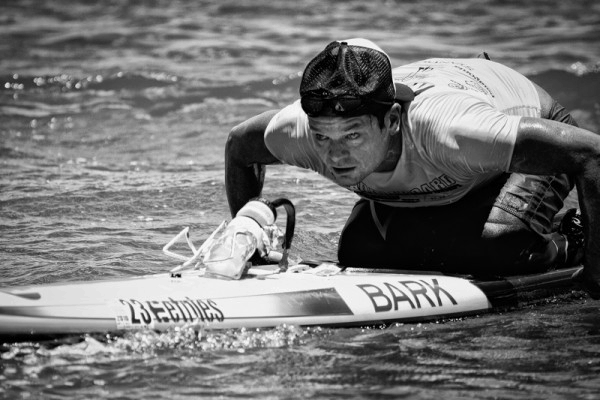
Question: It seems really hard to find an easy and reliable way to monitor my heart rate as a prone paddler. I bought a monitor this weekend but the unit grinds on my sternum something terrible. I used it to do my AT test but it would be tough to use it for hours on end.
– Anonymous, CA, USA
Answer: As you know, we are big proponents of training by heart rate and heart rate based training zones are included in each of our programs . That said, monitoring your heart rate while prone paddling can be an issue. Given that you are essentially lying on the heart rate monitor, eventually, the monitor will rub on your skin and become a nuisance. Before you toss your heart rate monitor or reject the whole idea before you give it ago, we have a few tips.
Fist thing – all heart rate monitors are not created equal. Most of us use use the Garmin Forerunner 910XT. The only issue is that the monitor comes with a stap with a big square gizmo in the center. This type of strap is not acceptable for prone paddling as the square gizmo
 will wreak havoc on your sternum. Our first tip is to swap out the strap the unit comes with and get the lightweight, more streamlined, Garmin strap that is sold with their cycling products. This monitor is essentially flat and there is no square gizmo in the center.

The second tip is that you should ignore the instructions that come with the heart rate monitor. The instructions tell you to wear the monitor below your nipples at the level of your solar plexus. The problem is that you will be paddling directly on that monitor if you wear it there. The monitor will work just as well if you wear it high on your upper chest. The only issue you are going to run into wearing it high on your chest is that it will tend to migrate lower as you paddle. A tight wetsuit or thermal rash guard will help keep it in place.
The third tip is that prone paddlers are going to have to be smarter than the average SUPer, cyclist, or triathlete when training with heart rate. Athletes in other sports can just strap on their monitor, go brain dead, and train according to the device on their wrist because the monitor does not get in the way. For prone paddlers, however, even if you follow the previous tips, on long paddles you are eventually going to get a rub.
Here is how to train yourself to learn your heart rate zones:
- Wear your heart rate monitor to do your AT test at least twice yearly.
- Wear your heart rate for at least two of your interval workouts each month. This will train you to feel your Zone 3 and Zone 4 heart rates. Truth be told, most paddlers know how to kill it when they are told to kill it. Training with your heart rate on hard workouts is not rocket science but using your heart rate monitor will go a long way to show you how to pace your intervals. Once you get accustomed to pacing and training at Zone 3 and Zone 4 heart rates, you can pretty quickly wean yourself off of using your monitor during interval workouts and train by feel/RPE. Once or twice a month, however, we recommend wearing your heart rate to make sure you are pacing your intervals properly.
- Where you really want to focus your heart rate based training is on your easy, endurance days. Most paddlers go too hard on their easy days. You really need to train yourself to dial things back and take it easy on your easy days. Wear your heart rate monitor for your easy days and during rest weeks for several months to get the hang of going slow and paddling in your zone 1 and zone 2 training zones. Once you get the hang of going slow, you can wean yourself off of your monitor and train by feel/RPE.
- Leave your heart rate monitor at home during any paddles longer than 60-90 minutes and do your best.
Roch