 06 Aug 2013
 Posted by mattwright
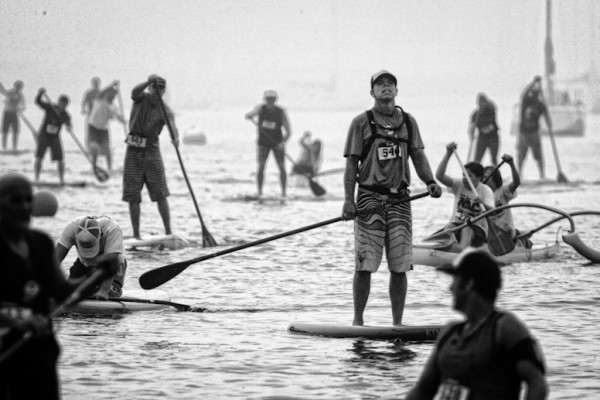
Molokai is done. The NYC 100 is in the record books. Catalina and Chattajack will be over soon. Stand up paddle race and prone paddle athletes who spent months training for these epic events can expect two things. First, great memories of the races and a sense of accomplishment for training and finishing the race. Second, feeling like dirt for a few weeks after the race.
Post race depression or post race blues, are names for what every endurance athlete, including paddle athletes, experiences in the days and weeks after an epic race. Within a few days after the race your sense of accomplishment wanes and is quickly replaced by emptiness, apathy, and, in some cases, mild depression. This condition can be even more debilitating when the race comes at the end of a season and your next race or goal is an entire winter away (I am talking about you Chattajack paddlers on the east coast)
Although there are several theories about why post-race depression occurs, it seems to be most prevalent in goal oriented individuals (e.g. those individuals who do epic events). Going in to these races, we are led to believe that the goal of finishing the race is the reward. The problem is that this is not the case. The reward was all of the time spent focusing on the race, training with our friends, and doing what you can to fulfill your potential. The goal was in the training.
Once your race is over so is the joy you experienced training for your race. Without the training and motivation that gave your life purpose as you prepared for the race, all you are left with is a big black hole of nothingness. Many athletes find themselves irritable and unmotivated to do anything including paddle.
Paddle athletes are so accustomed (errr addicted?) to their previous schedule they continue to train as if they are focusing on a race. This results in some sort of cognitive dysfuction as they feel like they should keep going but deep down say to themselves “what the heck am I doing out here training at 5AM?”
To make matters worse, if you are not accustomed to doing epic races, you will likely be fatigued from the race. This fatigue may last several weeks. To fight their depression, athletes often cling to what they know which is training. They train more to give themselves purpose but because of the fatigue from the race they cannot find their pre-race fitness. This creates even more cognitive pain, the depression worsens, and they train harder and harder to get back to the level of fitness they had before the race. Following this path is a fools game but the madness won’t end until you consciously take charge of the situation.
Overcoming/preventing post-race depression
Step 1: realize that post-race depression is extremely common in all endurance athletes who do epic races . It is OK to feel this way. It is interesting to note that the level of depression has essentially no correlation with how well you performed on race day. Podium finishers often feel the same way.
Step 2: If you are in a hole stop digging. Do not fight your fatigue or try to maintain your pre-race fitness. Recover properly. This may take 2-3 WEEKS. During this time, do not force your training.
Step 3: Consciously allow your fitness to wane. Remember, you cannot stay at your peak for months at a time. Fitness comes in waves. You cannot have a wave peak without a trough. You peaked for a race and now it is time to let your fitness wane a bit. Do something else. Do nothing. Cross train. Go surfing. Spend time with your family. Whatever you do – do something other than focus on your fitness. Trust us – it will return if (and only if) you first let it wane.
Step 4: Pick another goal that is well into the future. Maybe next year. Maybe in 4 months. Start training for that goal in a few weeks. That training will require you to go back to your base period of training and force you to follow step #3.