
 15 Feb 2014
 Posted by mattwright
I am doing the Molokai SUP race this year with a mixed team. Both guys are 61 & 62 years old and the woman is in her early 40′s. Us guys have surfed all our lives and continue to do so on a regular basis and are in good shape. We have done summer 3 to 5 mile SUP races the past 4-5 years. The women is a outrigger paddler and has done the Molokai race several times in a 6 person canoe and does short SUP races. We started training 2 weeks ago using your book as a guide. The guys currently can comfortably paddle 1 hour at about 12-13 minute miles in light wind open ocean swells on the north shore of Oahu. Trades haven’t come back yet.As a 3 person team for the Molokai at our age our goal is to be under 7 hours. Do we train for long distance, sprints or a hybrid of both? How does our age alter training? We were thinking of starting the race at 20 minute paddle sessions per person with 40 minutes in the boat. What is best way to warm up before each paddle while in the boat?
I appreciate any input.
Ed, Hawaii (we think)
Before we even get to your question (which is a great one) keep in mind that we believe that Molokai will sell out within a few hours after registration opens this year. Considering how many questions we get about Molokai training and how many Molokai training manuals we sold around the world in the last few weeks, if everyone decides to go to Molokai there is going to be a stampede for spots in 2014. Do not delay – when registration opens get your entry as soon as possible.
As you set up your training schedule you should also keep in mind that as long as you are otherwise healthy (check with your doctor before embarking on Molokai training, our rule is that “age is not a disease.” Around these parts we have older athletes going head to head with younger ones. 61 and 62? Meh – that is not a factor for us.You will be fine if you train right. Training right does not mean doing less while you are training it means focusing on your recovery. While a 22 year old can go hard and be fresh the next day, we need a bit more time to recover from long and/or hard sessions. Here is some more about training for guys like you and us. The 40 year old woman on your team – 40 is not old in our book. Not by a long shot.
Molokai is one of those races that seems easy on paper. You might say to yourself “well I can paddle for 20 minutes so if I just paddle then take a break and do that a bunch of times it will be no problem.” The reality is that stringing together broken up blocks of 20 minutes has a cumulative fatigue that is greater than just the amount of time you are working. To some degree you are going to be out there for 7 hours. Although a team is easier than solo it is not like you are only going on a 140 minute paddle. The emotions, warmups, cool downs, inevitable issues during race day, swell, travel, etc. all add up to make the event harder than it “should” be on paper. Additionally, you all need to be prepared for one member of your team to get sick, to get injured, to have a bad day, or just be weaker than the other two.
Your plan to take 20 minute pulls is a great starting point. One thing to keep in mind, however, is that the first person has to do a 30 minute pull as it takes that long for the boats to get out of the channel. Our recommendation is to do 20 minute pulls for 3 hours. If all going good at 3 hours switch to 15min pulls till hour 4 or 5 and then to 10min pulls in the last 1-2 hours. By the end of the race 10 minutes will seem like an eternity.
Paddling through the channel is almost always harder than paddling during your training. Very few paddlers go out on training rides with a support boat and challenge themselves with the current and swells you are going to encounter on the day of the race. As such you might find, however, that the actual time of your rotations will be dictated by the race and one or two of you might even be taking 30-40 minute rotations or back to back 20 minute pulls. This will be necessary if someone gets injured, has a bad day, gets sick, etc. Be prepared for it.
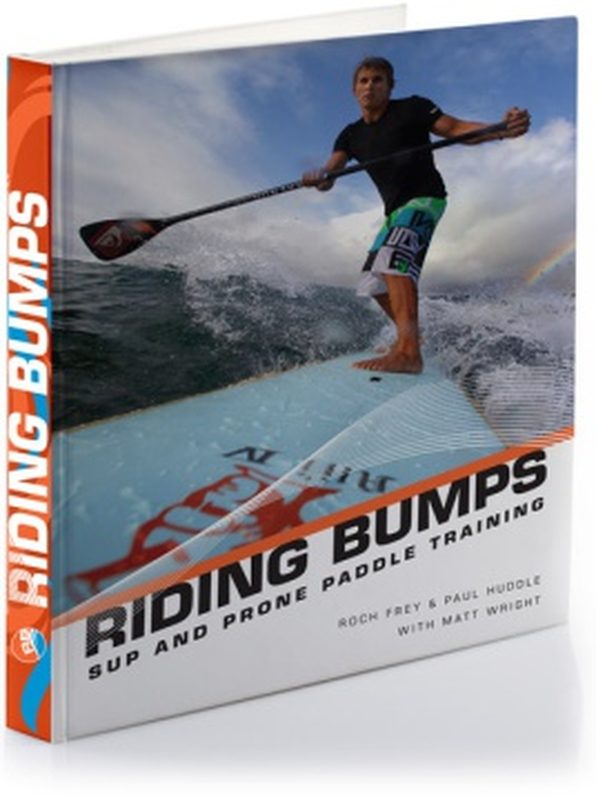
All of this means that each of you, as individuals, should train for a harder and/or longer race than you think you will be racing. If each of you can complete the Riding Bumps Molokai training program you will be golden. To modify that program you can go a little shorter on your weekend endurance paddles (2-3 hours) but follow the rest of the program, including the cross training, as best you can. During your longer endurance paddles add in some 10-15min harder efforts then 5-10min easier to quasi-simulate what you will be doing on race day as a relay team.
In your question you asked about endurance vs. sprint training because you will only be doing short pulls. We cannot emphasize enough that the worst thing you can do is focus on “sprint training.” In fact, if we had to choose between “sprint training” or “endurance training” we would go longer and slower every time. Your first goal is to finish the race. Your second goal is to do it fast. Training for sprints all the time will not allow you to either. You need to build a huge endurance base as that is money in the bank for these types of races. It might be of interest to know that track cyclists, whose races are, in some cases only 1000m, bike hundreds and hundreds of miles on the road each week. Even a short race like a track sprint is an endurance race. Your ability to go long will be of greater benefit than your ability to go fast.
As far as warming up in the boat,in our experience, there is nothing that you can really do to warmup before your pull while you are on the boat. The only tip we have is to do what you can to “ease” in to your pull rather than jump in the water and hammer wide out the first 2-3min. Easing in to each leg will help you avoid dying after 10 minutes.
The major factor that will make or break your race is race day nutrition. Eat much more than you think you need to eat. Hunger is not an accurate gauge of when you need to eat. Your heart rate HR and metabolism are still cranked up when you take your 20-40min break. Each of you should be monitoring what the others are eating and drinking. It is a team effort and many people flub the nutrition part of the equation. Keep after one another. Nutrition is not intuitive. Here are some tips.
When all is said and done, do not be surprised if you are smashed after the race. This is where your age might catch up with you. Your might need a month off and do not be surprised if you encounter a spell of post race depression .
Before we let you go – we would like to interject what might turn out to be a little controversy in this answer. In our experience, we recommend always taking the rhumb line (straight line). Before the race there will be gobs of discussion about winds, tides, and currents. Do your best to ignore it. In the 6 crossings that Roch has done, regardless of the condition, every time this was the fastest. It may also be of interest to note that this is what Jamie Mitchell did for 10 years during his dominance of the race. NEVER go too far south or you battle wind and swell the last 3-5 miles when you get into portlock.
If you do all of that – 7 hours is certainly a reasonable goal.
Roch and George