 19 Jul 2014
 Posted by mattwright
Image used with permission from Quickblade paddles (quickblade.com)
For many paddle athletes paddle choice is an afterthought. Paddle selection, however, should be given as much (or more) consideration than your SUP race board. Poor paddle selection may result in decreased performance, fatigue, injury, and a general loss in the enjoyment associated with SUP racing.
Good paddles are expensive
Thoroughly researching your SUP paddle purchase is important because good paddles are expensive. Although wood, composites, and combinations of materials are all used in high end paddles, most paddle racers at the time of the writing of this article use carbon fiber paddles. Few other materials can match the stiffness to weight ratio of carbon. Moreover, because carbon can be molded into just about any shape and carbon can be layered according to the shaper to add stiffness or reduce stiffness in different areas of the blade or shaft, carbon paddles can be made by shapers to perform in many different ways.
The downside of carbon is the cost. That said, the cost associated with a carbon fiber paddle is worth the price if you are serious about your racing. In our experience, other materials are either too heavy or lack the stiffness and power transfer of the carbon paddles we have used in the past.
Paddle blade shape characteristics and purchasing decisions.
The paddle blade is generally described in terms of
- Blade size or surface area
- Blade shape which includes blade height, shoulder shape, and enhancements to the blade face such as concavities and dihedrals.
Blade size is almost always the focus of the purchasing decision when SUP racers are comparing paddles. Although blade size is critically important, blade size is just the tip of the iceberg.
In our experience, the blade shape including the shape of the shoulders (e.g. high aspect or low aspect) and the blade face shape (curved, dihedral, etc.) has as much of an effect (or more) on paddle performance as does the size of the blade. The blade shape characteristics make it difficult to directly compare paddle blades of different sizes because one blade may “feel” larger or smaller because of the varying blade shape. The blade shape, as much as the blade size, determines how the blade interacts with the water and gives each paddle it’s unique feel and characteristics. This is why you might hear manufacturers say things like “it is a 90 but paddles like a 95.”
Finally, it is our opinion that there is no single blade shape that is correct and there is no shape that is superior to another in all cases. What works for one paddler will be a disaster for another. We believe that the variability in what paddlers prefer in their blade has as much to do with individual paddle technique. As a result, to some degree, your paddle must be matched to your technique. For example, a paddler with a short, high cadence, stroke may prefer a high aspect blade while a paddler with a slower deeper stroke may prefer a low aspect blade. As another example, a paddle with a sloppy technique may not be able to benefit from curved blade face because the blade gets hung up in the water at the end of the stroke.
Concaved blade face
Some modern SUP paddles have a slight scoop or concavity on the power side of the blade face. This concavity is designed to improve “grip” during the catch phase. Marketers may refer to this feature by describing the feel of the blade in the water. As general rule, concave blade faces feel larger than their blade size would suggest when paddling. Too much concavity, however, will result in water being retained on the blade face at the end of the stroke resulting in a “heavy” feel and difficult release.

Shoulder shape
One of the biggest differences in blade shape that will have a dramatic effect on the feel of the paddle is the shape of the blade shoulders. In general, paddle blades are described as high aspect or low aspect with regard to the shape of the shoulders.
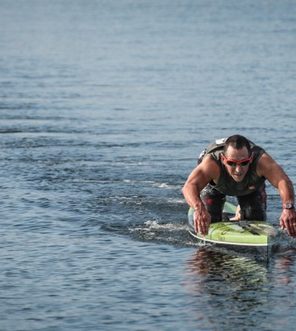
In our experience, the feel of a high aspect blade is tremendously different from a tear drop or low aspect blade shape. It is also our experience that seemingly minimal changes in the shape of the shoulders of the paddle and the length of the blade have dramatic effects on the feel of the paddle. We are inclined to paddling with a longer and deeper stroke so we prefer a more low aspect blade as the low aspect blades can be driven deeper in the water and are more forgiving in different water conditions. Again, this is personal preference.
Dihedral blade face design
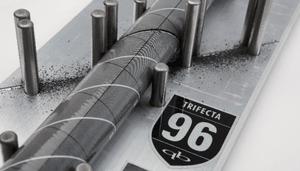
Back in the early days of SUP, the paddles we used had a flat blade face and the blade zigzagged during the power phase of the stroke. This movement is referred to as “flutter.” One of the improvements to paddle design we have seen over the years is the addition of a raised spine in the blade face other wise known as a dihedral. The popular, Quickblade V-drive paddle is known for it’s double dihedral.
The dihedral on the power side of the blade guides water from across the surface of the blade face. This reduces flutter and can reduce injury, improve power transfer, and improve performance. In the following image the dihedral is the “spine” along the power face of the blade (image courtesy of Quicknlade paddles)
Paddle Stiffness
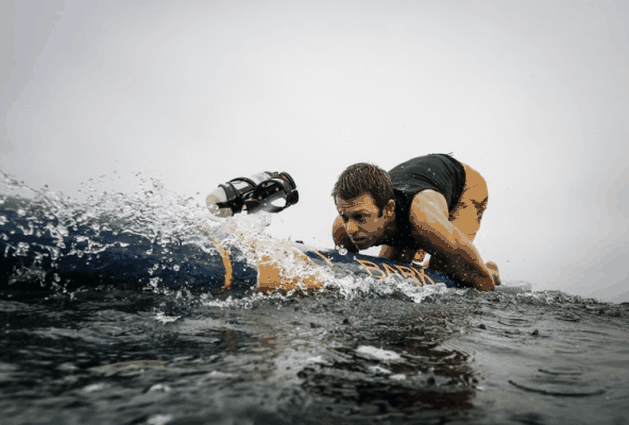
Carbon is the preferred material for most race paddles because of the stiffness to weight ratio. Carbon, however, can be manufactured to be “too stiff” and the stiffness becomes a liability because the forces associated with paddling are directed to the soft tissues of your arms, shoulders, and spine, rather than the paddle. Some degree of flex is generally required in the paddle shaft. This is why you will see the paddle shaft flexing in nearly all racing photos
Remember: a paddle shaft with a slight flex does not mean it is a cheap paddle or that the rider is overpowering the paddle. The following image demonstrates what we are talking about.
It should be noted, however, that the blade face should not flex at all as deformation of the blade face during the paddle stroke can result in poor performance as the water is guided haphazardly over the blade face.
Paddle shaft shape
Paddle shafts come in oval and round shapes. Some paddle shafts taper at the top. Others have the same diameter throughout the length of the shaft. In our experience, the paddle shaft shape is personal preference. In theory, an oval shape may be more ergonomic but we have used round shaped paddle shafts for years and the oval shape is an annoyance to some paddlers.
Blade angle
The blade on most SUP paddles is angled relative to the shaft. The blade angle allows you to begin a stroke further away from your body resulting in a long and more powerful stroke. At the beginning of the stroke, the angled blade pushes down on the water creating lift and glide. Finally, at the end of the paddle stroke, the blade angle allows you to release the blade from the water smoothly without lifting up on the water and burying your tail.
The blade angle will significantly alter the feel and performance of your paddle.
Paddle shaft design
Paddle shafts come in straight and bent designs. We know several racers who prefer a bent shaft design but, largely, racers are using a straight shaft paddle. According to manufacturers “a bent shaft geometry adds extra reach in the catch phase of the stroke and allows for a straighter wrist alignment through the stroke which reduces fatigue and tension in the hand and wrist.” In our experience, the bent paddle shafts we have used were a liability and seemed to reduce our power transfer during the power phase of the stroke.
When shopping for a paddle – take your time
There is a bewildering array of paddles available on the market. Manufacturers build in a combination of the previously mentioned features to give each paddle particular performance characteristics and “feel.”
The only way to determine which paddle will work for you is to try the paddle. Our recommendation is to get our there and give the paddle a test drive for at least 30-45 minutes. Longer would be better. Our experience is that a paddle may feel good for a few strokes but over time, as you become fatigued, some aspects of the paddle may become a liability over time.
Remember, there is no ideal paddle shape or size. There is no right or wrong paddle. If there was, all vendors would be manufacturing the same shape paddle.
Most serious racers have a quiver of paddles of different sizes, shapes, and lengths to match differing water conditions, race lengths, and board lengths and heights. It is nearly impossible to have a single paddle that works in every situation.
In part 2 of this series (next week) we will look at the paddles that three of our editors use, why they use them, and talk with the shapers of the paddles to dig deeper into the design characteristics of those paddles.