 17 May 2016
 Posted by mattwright
I am an ordinary athlete that is 44 years old, 165lbs, 6’0″ tall, and love the outside world. I enjoy the outside most when I am on the water or in the wilderness working my heart. My last real race of any consequence was running the Leadville Trail 100 in 2010 in 27 hours, 50 minutes. Since then, I have been tapering my running (only 1x per week and usually 11 – 15 miles), swimming (4x – 5x per week w/ 5,000 – 6,000 meter per time), do 1x HIIT workout per week, and do 3x yoga per week.
In the summers, I live in Nantucket and love surfing on my SUP. This summer, I want to pickup SUP race paddling. I have been looking for something to train for to keep me inspired and for the extra challenge. I am going to do a few crossings (Nantucket to Martha’s Vineyard) and may even enter a race like the Cape Cod bay Challenge.
Instead of running another ultra or swimming the English Channel, I want to master SUP racing. I relied upon a good coach during my running and wanted to find a group/people that work with hacks like me. What I lack in talent, I make up for in endurance.
I would love your insight about how to setup a weekly training regimen to get me prepped for tackling a longer race and/or crossing.
OK first things first. You are an ultrarunner. Nothing about that is ordinary. You also do at least 7+ workouts per week. Normal is who Dr. Oz talks to. Normal is when you hear that 30 mintues per day of exercise will keep you healthy. You are on the far end of the fitness bell curve even if you are not wining races.
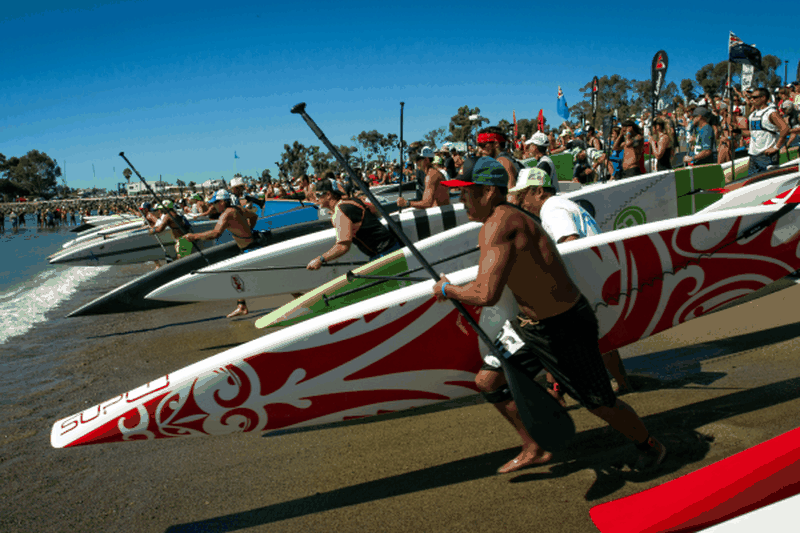
You are athletic and, because we know so many ultra runners, we also know that if you are anything like them you have a brain that might/could/will get you into trouble. Your ability to withstand pain and training is a good thing in most cases but can, in some cases, work against you. In this case, your mind might be working against you but lets see…..first some background.
We don’t post all of the emails we get. Notably we don’t post all of the emails we get from athletes with shoulder injuries. We just forward them to this page and that is about as far as we go because discussing injury treatment is for doctors and we are do not offer medical advice on this website.
Many of the emails we get are from endurance athletes (like yourself, like us) who are coming to paddle sports later in life. Many of these athletes have an engine that their shoulders cannot keep up with. The good part about what you wrote to us is that you currently swim and surf. Yoga is also good. Shoulder flexibility is always good. Those are are huge bonuses for you. The real problems start when we get runners and cyclists wanting to go full tilt paddling and don’t give their bodies and connective tissues and joints time to adapt.
Paddling puts so much of a stress on your shoulders and joints (much more than swimming) you need to be careful and give your connective tissues some time to catch up with your muscles and engine. Athough it is possible that you can do one of the epic endurance events in your first (or even second) year of paddling we caution you that maybe it would be prudent to take things slow for a while so you can go fast and go the distance later. Maybe in your first and second years, keep SUP as a cross training workout and don’t focus too much. Maybe play around and enter a few short distance races and have fun. Maybe travel around and go to a few stroke clinics and get your stroke 10,000% dialed in before taking a chance and learning bad habits (which can lead to injury)
What we are saying is that although we can give you a program that should get you to the end of whatever challenge you are after, and we would love to sell you one of our meteoric ultra distance training program s, maybe, just maybe doing less rather than more for a few months will get you where you want to go faster than going full tilt right out of the gate.
If, however, you want some structure in your training take a look at our short/mid distance program. There is a lot of gym work and cross training (running/bike whatever) and you will even have a high intensity day on the water. It is likely that the times and distances will seem lower than you can handle. Trust us – paddle sports take a toll on your body. Also here is our conversion estimates between paddling and other sports. A little time on the water goes a long way.
Go slow to go fast.